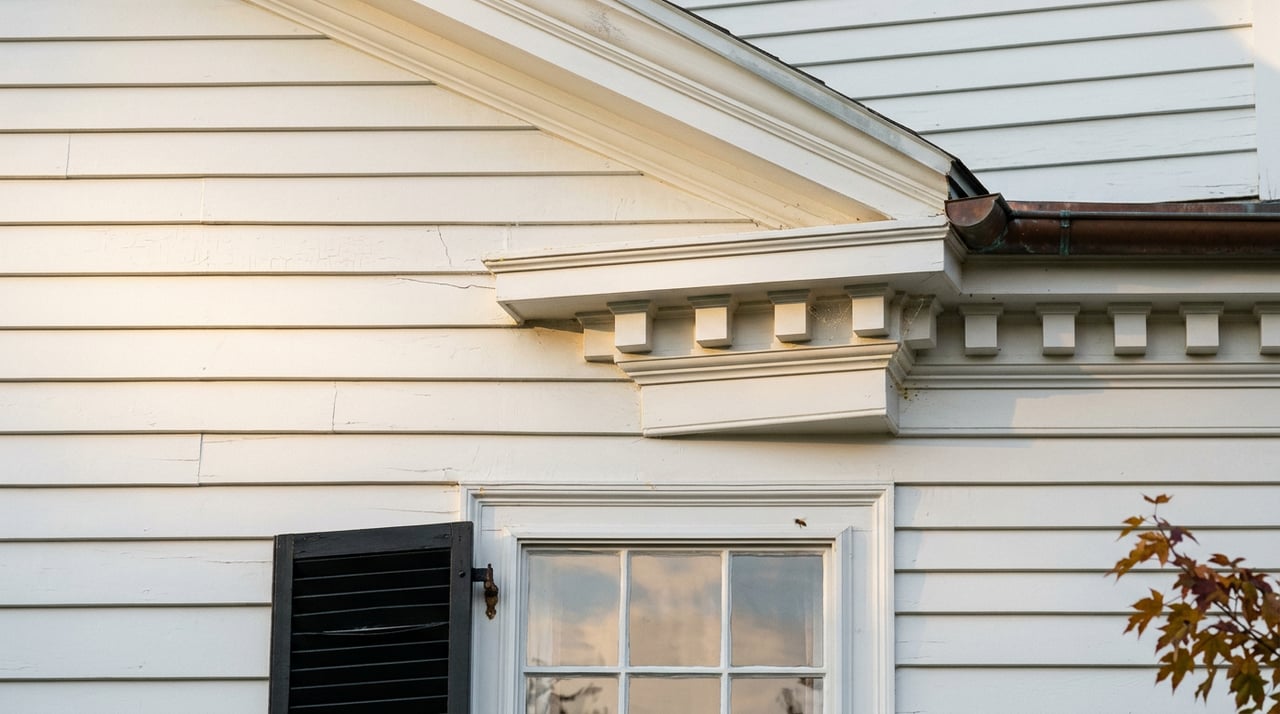
On May 11, 2026, the Newburyport City Council voted 9-2 to advance Ordinance 217, which extends the city's demolition delay from twelve months to eighteen for qualifying historic structures. First reading only, but the amendment creating the straight 18-month period cleared 8-3 on the same night. If you are buying a pre-1950 house in Newburyport with a renovation in mind, the age of that house just became a due-diligence line item rather than a charm bullet.
The reason is arithmetic. A Preferably Preserved finding from the Newburyport Historical Commission now parks a project for a year and a half. Add design, permitting, and financing, and a straightforward "buy, gut, resell" pro forma stretches past two years of carrying cost. That is the market the amendment is trying to reshape, and it is worth understanding before you write an offer.
The Vote, Briefly
The ordinance was sponsored by Ward 2 Councilor Stephanie Niketic and Councilor At-Large Sarah Hall. It had been discussed in regular meetings on March 10, April 7, and May 5, according to Councilor At-Large Ben Harman. The original proposal called for a 36-month delay and would have swept in buildings 50 years and older; both were scaled back before the vote. The final amendment applies to primary structures 75 years or older and accessory structures 100 years or older, when the Newburyport Historical Commission has deemed them preferably preserved.
Preservation advocates had pushed for 24 months. Jared Eigerman, speaking for the Newburyport Preservation Trust, argued that the existing 12-month delay "doesn't do anything," pointing to recent Spofford Street houses he said went straight to the landfill after the clock ran out. Ward 1 Councilor Sharif Zeid and Ward 6 Councilor Mary DeLai voted against the final ordinance.
What Actually Counts as "Demolition"
Buyers usually read "demolition" as a bulldozer. The Newburyport code reads it much more broadly. Under Article X of Chapter 5, any of the following can trigger review by the Newburyport Historical Commission on a structure 75 years or older:
- A change in roof pitch or roof line
- Adding, removing, or altering towers, cupolas, and similar roofed features
- Widow's walks, decks, or railings that project above the ridgeline or sit within three feet of a flat roof edge
- Any change to the building footprint
- Relocating the building on its lot or off it
- Beginning partial demolition with the intent to complete it
Window replacement in existing openings does not, on its own, trigger review inside the Demolition Control Overlay District. Dormers are allowed but constrained: at least 1'6" set back from the parallel wall below, 3'6" from the perpendicular wall, and no windows in the side walls. These are the details that turn a two-week schedule into a six-month one when the architect's first draft arrives.
The Three Layers Governing Ward 1
Downtown and the surrounding blocks already sit under overlapping protections that outsiders often miss. Owners in these zones have been operating with a high bar for years, and that bar is a large part of why the streetscape looks the way it does.
| Layer | What it covers | What it triggers |
|---|---|---|
| Demolition Delay Ordinance | Primary structures 75+ years, accessory 100+ | NHC review; 12-month delay today, 18 months if Ordinance 217 is finalized |
| Demolition Control Overlay District (DCOD) | "Contributing" structures per the Historic District Data Sheets | ZBA Special Permit if more than 25% of exterior walls are demolished |
| Downtown Overlay District | Commercial core | Parallel review layer alongside DCOD |
| Fruit Street Local Historic District | Established 2007, the city's only LHD | Certificate review for exterior changes visible from a public way |
As Councilor Zeid put it during the debate, demolishing in Ward 1 already requires an applicant to effectively prove the building has no remaining economic value. That is intentional, and it explains why he questioned whether the larger delay was aimed at the outer wards rather than the historic core.
Reading the Market Through the Ordinance
Newburyport's premium runs on its older stock. The Zillow Home Value Index put the citywide average at $945,413 as of May 31, 2026, up 3.4% year over year, with homes going pending in around ten days. Movoto's June 2026 snapshot showed a median list price of $1.39M and a median 28 days on market. Redfin's citywide read for November 2025 pegged the median sale at $900K, up 7.1% year over year, at roughly $538 per square foot, with hot homes selling above list in under two weeks.
The interesting figure is what happens downtown. Redfin's trailing three-month median for the Downtown Newburyport submarket ended March 2026 at $740K on five sales, a small sample but a real signal. The downtown discount to the citywide median is not about the neighborhood; it is about the constraint set. When a buyer cannot easily add a second story, pop a rear addition, or reshape the footprint, the price of a "Contributing" house prices in that friction.
The pending 18-month rule pushes that math further. A 12-month delay is roughly the same amount of time a serious project needs for design, permitting, and other board approvals anyway, which is why preservation advocates argued it had lost its bite. Eighteen months adds a full carrying-cost cycle that most spec buyers will not underwrite. The likely outcome, in the near term, is that renovation-oriented buyers pay less for houses flagged as preferably preserved and more for houses just outside the trigger, either by age or by condition. Sellers of pre-1950 homes should assume that at least some of their buyer pool is now running two spreadsheets, and price accordingly.
What to Verify Before You Write an Offer
If you are close to acting on an older Newburyport home, the diligence list is short but non-negotiable:
- Pull the Historic District Data Sheet and confirm whether the property is listed as "Contributing." That single word determines whether DCOD review applies to more than 25% wall demolition.
- Confirm whether the parcel sits inside the Demolition Control Overlay District or the Downtown Overlay District. The overlays are mapped on the city's Planning and Development pages.
- Ask your builder to scope the proposed work against the code's demolition definition. Roofline, footprint, and features projecting above the ridgeline all count.
- If the plan touches the roof, verify dormer setbacks and window placement early. These are the details that get caught late.
- Track the second reading of Ordinance 217 on the city calendar. First-reading approval is not enactment; the delay period that governs your closing depends on when, and whether, second reading passes.
- If preservation is your goal rather than your obstacle, remember that Newburyport passed the Community Preservation Act in 2002 with a 2% surcharge that funds historic preservation projects.
FAQ
Does the delay apply to interior renovations? No. The ordinance governs partial or total demolition of the structure, roofline changes, footprint changes, and specific rooftop features. A kitchen gut, a bath addition inside the existing envelope, or refinishing floors is outside the trigger.
Is every 75-year-old house automatically preferably preserved? No. Age is the screening threshold. After application, the Newburyport Historical Commission holds a public hearing and votes on whether the specific building is significant and intact enough to preserve. Many are released without a delay invoked.
Can the NHC release a building conditionally? Yes. The commission can invoke the delay and immediately issue a conditional release tied to a specific set of reconstruction plans, which is how some projects move forward on a defined design rather than a temporary moratorium.
Does window replacement trigger review? In existing openings inside the DCOD, no. Change the opening dimensions, add new openings, or combine window work with other exterior demolition, and the calculus changes.
Buying or selling an older home in Newburyport rewards preparation more than most markets, and the pending change to the demolition delay is a good reason to bring that preparation forward. If you want a plan built around your specific address, timeline, and renovation goals, Shannon DiPietro and the team at DiPietro Group Real Estate can walk the property with you, pull the right records, and help you price the transaction with the ordinance in mind.