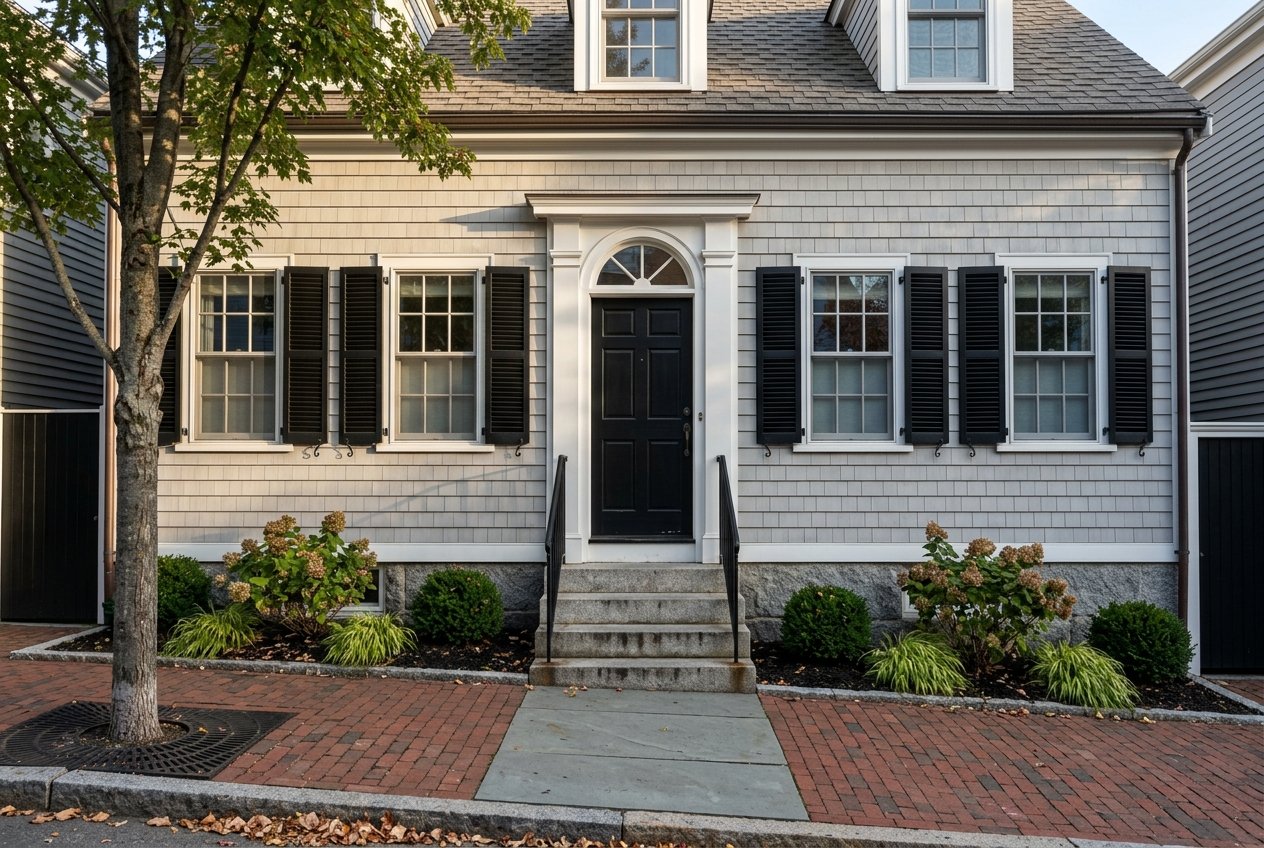
If you love Newburyport, one big question can shape your whole home search: do you want to live right in the middle of it all, or do you want a little more breathing room? That choice matters because in-town and outskirts living can feel very different day to day, even within a compact city. If you are weighing walkability, lot size, parking, housing style, or flood questions, this guide will help you compare your options with more clarity. Let’s dive in.
Newburyport at a Glance
Newburyport is a small coastal city with 19,148 residents spread across 8.35 square miles. That compact footprint is part of what makes the city appealing, but it also means different areas can offer distinct lifestyles within a short distance.
City planning documents describe Newburyport as a place with a clear urban core, surrounding traditional neighborhoods, postwar residential areas, commercial corridors, and a beach community on Plum Island. For buyers, that means your lifestyle fit often comes down to where within the city you land, not just whether you choose Newburyport at all.
For this comparison, in-town generally means downtown plus nearby South End, North End, and waterfront-adjacent blocks. Outskirts generally means the West End, Storey Avenue and Low Street, the Route 1 and MBTA edge, and Plum Island.
What In-Town Living Feels Like
In-town Newburyport offers the city’s most walkable and mixed-use environment. If you picture older streets, nearby shops, access to the waterfront, and a daily routine with more time on foot, this is usually the area buyers start with.
Housing in the core is denser and more varied than in the outer parts of the city. According to the city’s master plan, downtown includes single-family homes, condos, two-family homes, three-family homes, and multifamily buildings, with the majority of larger multifamily buildings located in and around downtown.
You will also see the older fabric of Newburyport more clearly in-town. The city notes that many properties near downtown are smaller and older, which is consistent with tighter lot patterns and a more traditional neighborhood layout.
In-Town Housing Mix
If you want options beyond a detached single-family home, in-town is typically where you will find them. Downtown assessor data in the city’s master plan shows:
- 184 single-family homes
- 89 condos
- 52 two-family homes
- 14 three-family homes
- 47 multifamily buildings
That mix can appeal to buyers who want lower-maintenance ownership, a historic setting, or a property close to daily destinations. It can also be a strong fit if you are relocating and want a home base that puts Newburyport’s core amenities close at hand.
In-Town Lifestyle and Walkability
Newburyport’s downtown lifestyle is built around access and activity. The city is a designated cultural district with 13 art galleries, four museums, four theaters, four cultural centers, and 12 performance spaces.
The downtown area is also tied closely to the waterfront and walking routes. The Clipper City Rail Trail includes a 1.1-mile multi-use path connecting the MBTA station and the Merrimack shoreline, with links to parks, the waterfront, and nearby businesses.
If your ideal day includes walking to coffee, browsing local shops, spending time near the water, or using the rail trail, in-town living supports that kind of routine better than most outer areas of the city.
In-Town Trade-Offs to Expect
The biggest trade-off is often space. Smaller lots, older homes, and denser streets can mean less private outdoor area and fewer homes with large driveways or newer layouts.
Parking is another major factor. The city’s system includes resident street permits, municipal lot permits, and garage permits, which tells you a lot about how parking works in the core. Current city rates are $10 per year for eligible residential street permits, $15 per year for municipal lot resident permits, and $60 per month or $720 per year for residential garage permits.
If you are used to easy off-street parking, this is something to think through early. In-town convenience often comes with managed parking rather than abundant private parking.
Historic Review in the Core
Buyers who plan to update a home should look closely at location before making assumptions. In the historic core, exterior changes may involve more review than they would in newer parts of the city.
The city’s Historical Commission provides advisory opinions on historic properties, and the Downtown Overlay District is intended to preserve architectural, cultural, and historic character. Many protected buildings are located on streets such as Federal, High, Merrimac, State, and Water, so renovation plans should always start with a clear understanding of what rules may apply.
What Outskirts Living Feels Like
Outskirts living in Newburyport usually means more detached homes, more room, and a more car-oriented daily pattern. If your top priorities are lot size, off-street parking, or a quieter residential layout, the outer areas may fit you better.
That does not mean every outskirts area feels the same. The West End, Storey Avenue corridor, Route 1 and MBTA edge, and Plum Island each have their own character, but they generally offer a different pace and housing pattern than downtown.
West End and Outer Neighborhood Patterns
The West End is one of the clearest examples of a lower-density residential setting in Newburyport. The city’s master plan says development there was largely post World War II and includes larger lot sizes with high concentrations of single-family homes.
In the neighborhood table, the West End has 871 single-family homes and essentially no condo or multifamily stock. If you are focused on detached housing, a more suburban feel, and more separation between homes, this area may be worth extra attention.
Plum Island Living
Plum Island is part of Newburyport’s outer geography, but it offers a very different feel from a typical suburban edge. The city describes it as a barrier island with a mix of older camp-style cottages and newer, larger homes.
The neighborhood table shows 443 single-family homes on Plum Island, along with only small numbers of condos and other housing types. It is compact rather than sprawling, but the beach setting gives it a lifestyle identity that is separate from the in-town historic core.
Storey Avenue and the Route 1 Edge
Other outskirts areas are more functional and vehicle-oriented. The city describes Storey Avenue as a heavily trafficked corridor lined with gas stations, supermarkets, drive-through restaurants, banks, and pharmacies, serving as a key connection between the West End, I-95, and downtown.
The Route 1 and MBTA area is better viewed as a hybrid edge district than a classic suburban fringe. The city is planning it as a mixed-use, transit-oriented area with shared parking and walkways to the rail trail, which may matter if you want access to transportation without being right downtown.
Space and Lot Size Differences
One of the clearest differences between in-town and outskirts living is lot size. The city’s master plan notes that lot sizes generally rise from about 8,000 square feet near downtown to 20,000 square feet west of Route 95.
Current zoning patterns support that same trend. The zoning table shows smaller minimum lot sizes in districts closer to denser development and much larger minimums in lower-density districts.
Citywide housing age and lot data also reinforce the point. Pre-1949 single-family homes average about 0.21 to 0.23 acres, while post-1990 homes average about 0.43 to 0.49 acres. In simple terms, older in-town homes are more likely to sit on tighter lots, while newer outer-area homes are more likely to offer more land.
Budget Priorities Matter Citywide
Newburyport is not a low-cost market, no matter which part of the city you choose. Census estimates show a median owner-occupied home value of $834,000 and median monthly owner costs of $3,436 with a mortgage.
That is why this decision is often less about whether one area is cheap and more about what you want your money to buy. In-town buyers may be prioritizing walkability, historic character, and proximity to the waterfront, while outskirts buyers may prefer to direct more of their budget toward square footage, lot size, and off-street parking.
Flood Questions to Ask Anywhere
Flood and storm-surge exposure should be evaluated address by address, not by broad assumptions. The city’s master plan identifies flood-prone locations in both in-town and outer areas, including State Street and Market Square downtown, Hale Street, Ocean Avenue and Water Street, and Plum Island Turnpike near Joppa Flats.
Plum Island deserves extra attention because the city notes that future growth there will be restricted due to flooding and storm surge. Still, flood questions are not just a Plum Island issue. If a home is coastal or low-lying, you should ask about flood zone, elevation, and drainage no matter which neighborhood it is in.
Which Newburyport Lifestyle Fits You Best?
If you are deciding between in-town and outskirts living, it helps to focus on how you want everyday life to work. The right answer usually becomes clearer when you think beyond the house itself.
In-Town May Fit You Best If
- You want walkability to downtown destinations, the waterfront, or the rail trail
- You are open to condos or mixed housing types
- You like older homes and a historic street pattern
- You are comfortable with permit-based parking
- You want daily access to cultural venues and the city center
Outskirts May Fit You Best If
- You prefer detached homes
- You want a larger lot or more outdoor space
- You value off-street parking and a more car-oriented routine
- You prefer postwar or lower-density residential streets
- You are exploring Plum Island for its coastal setting or the West End for its single-family housing pattern
Final Thoughts on Newburyport Homes
There is no one-size-fits-all answer in Newburyport, and that is part of the city’s appeal. You can choose a home that keeps you close to downtown energy and waterfront access, or one that gives you more room and a different pace while still staying connected to the city.
The key is knowing what trade-offs matter most to you before you fall in love with a listing. If you want help narrowing down the right part of Newburyport for your goals, Shannon Dipietro can help you compare homes with a local, practical strategy.
FAQs
What is considered in-town living in Newburyport?
- In this context, in-town generally means downtown plus nearby South End, North End, and waterfront-adjacent blocks.
What is considered outskirts living in Newburyport?
- In this context, outskirts generally means the West End, Storey Avenue and Low Street, the Route 1 and MBTA edge, and Plum Island.
Is downtown Newburyport more walkable than outer areas?
- Yes. City information points to downtown as the most walkable environment, with access to the waterfront, cultural destinations, and the Clipper City Rail Trail.
Are homes in outer Newburyport neighborhoods usually on larger lots?
- Generally, yes. The city’s master plan says lot sizes tend to increase as you move away from downtown, and newer homes citywide tend to sit on larger lots than older homes.
Does living in downtown Newburyport mean dealing with parking permits?
- Often, yes. The city offers resident street permits, municipal lot permits, and residential garage permits, which reflects a more managed parking environment in the core.
Are flood risks only a Plum Island concern in Newburyport?
- No. The city identifies flood-prone locations in both downtown and outer areas, so buyers should ask about flood zone, elevation, and drainage for any low-lying or coastal address.
Should buyers expect historic review on all Newburyport homes?
- No. Historic review is more relevant in the core, especially in and around the Downtown Overlay District and on certain historic streets.